Kuang-Yi Ku
Veronica Yakimovich
30 March, 2026
Interview
Tzu-Yen Chen
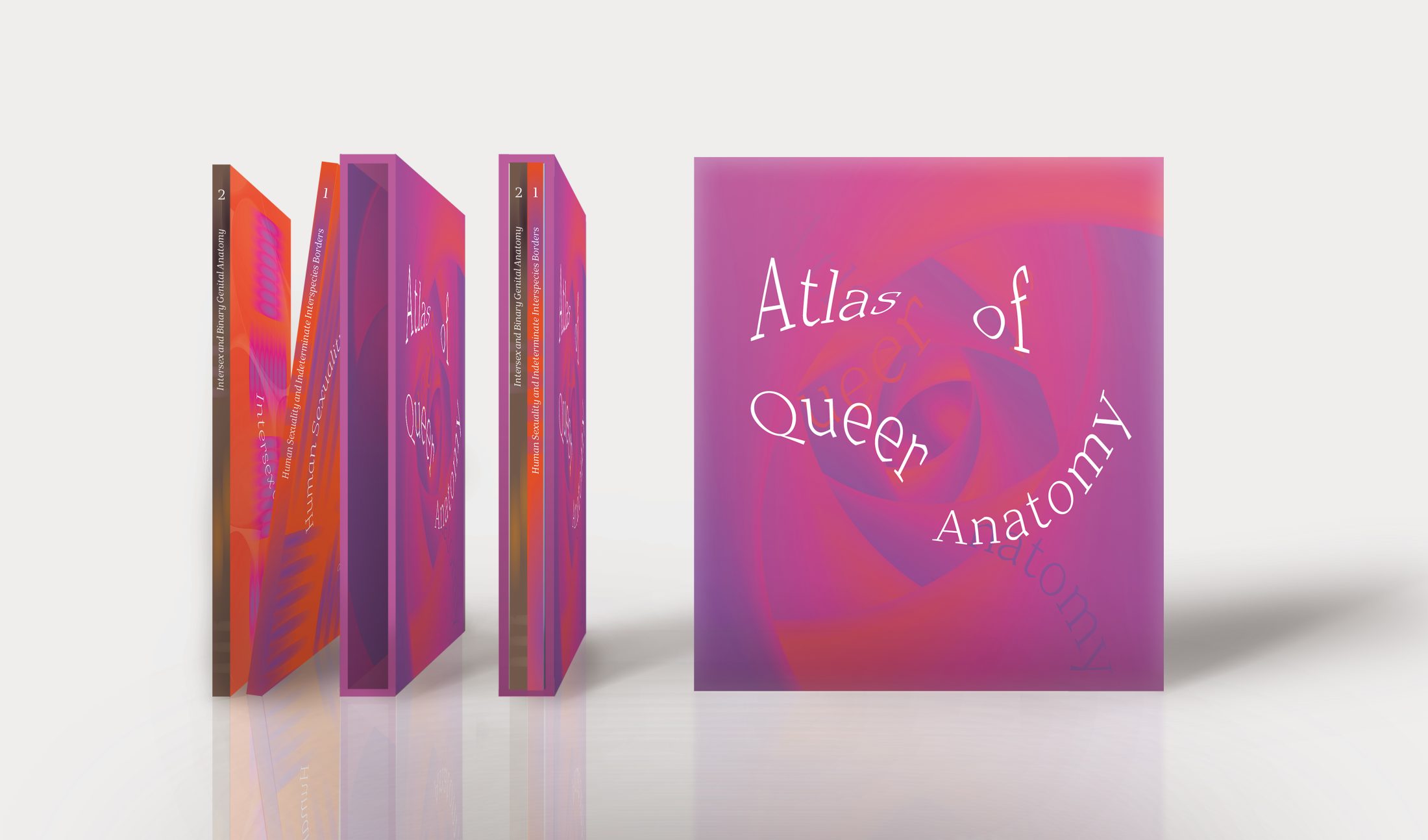
How can art challenge and expand the boundaries of classical anatomy teaching in medical education? In this Interview, artist Kuang-Yi Ku talks about his project Atlas of Queer Anatomy, created in collaboration with Prof. Dr. Henry de Vries.
Tell me about yourself and your artistic practice. What themes or questions do you engage most in your work?
I'm an artist, designer, and design educator. Before being an artist, I worked as a dentist for a couple of years after graduating from a dental school. Many of my artistic practices and design research are related to medical technology, biosciences, scientific research perspectives. Especially, I'm interested in how, within medical technology, there are ethical controversies and social problems and how I can use artistic research to uncover the hidden complexity behind medicine.
In the Atlas of Queer Anatomy, you engage with the limitations of classical, traditional anatomy teaching and representation of human bodies. What are your critiques of traditional anatomy? Why did you feel that the Atlas is important to make?
It’s actually a collaboration project. Henry de Vries, who is a professor in the medical department at the University of Amsterdam, is working with me on this project. He is a dermatologist and an STI expert. He is also an art lover. We are both from a medical background: he's from medicine, and I am from dentistry. Then, we are also both from queer community. So, we have similar research interests.
We came up with an idea to go back to the basic medical training at a medical university. We thought that medical education is a very linear learning: you learn anatomy and physiology, so you know how the body works, and what it looks like. In the senior year, you learn pathology and surgery. So, you basically first learn what the ‘healthy body’ looks like, and then you learn what the ‘diseased body’ looks. And you learn how to cure it. But we discovered that this linear training is lacking diversity and inclusion.
Anatomy is the first topic we wanted to dig into because it's very visual, since every medical student learns it by dissecting the body through illustration books. Since anatomy’s approach to learning is unique and evolving, it offers a good starting point.
Apart from that, the classical anatomy textbooks of the mid-20th century are very white-centered, heterosexual, and male-oriented. But, for example, in Taiwan, we still use it. Every medical school uses a textbook where no one looks like a Taiwanese person. Also, Henry was born in Suriname, a country with a colonial history with the Netherlands. I think we both have this post-colonial mindset.
We want to include more care for LGBT people. We are using art and design as a method to articulate queer anatomy, as a symbol, and as a critique of the existing textbook. Art is powerful, critical, especially contemporary art and contemporary design. We want to make a statement to the medical world. Also, in the future, we want to bring Atlas into the real medical context to engage with real medical students and teach them to understand and be engaged with the inclusive medical context.
I also noticed that the Atlas is structured in chapters. I was wondering how the structure came about. Was it coming from medical sources, or maybe more from artistic intuition?
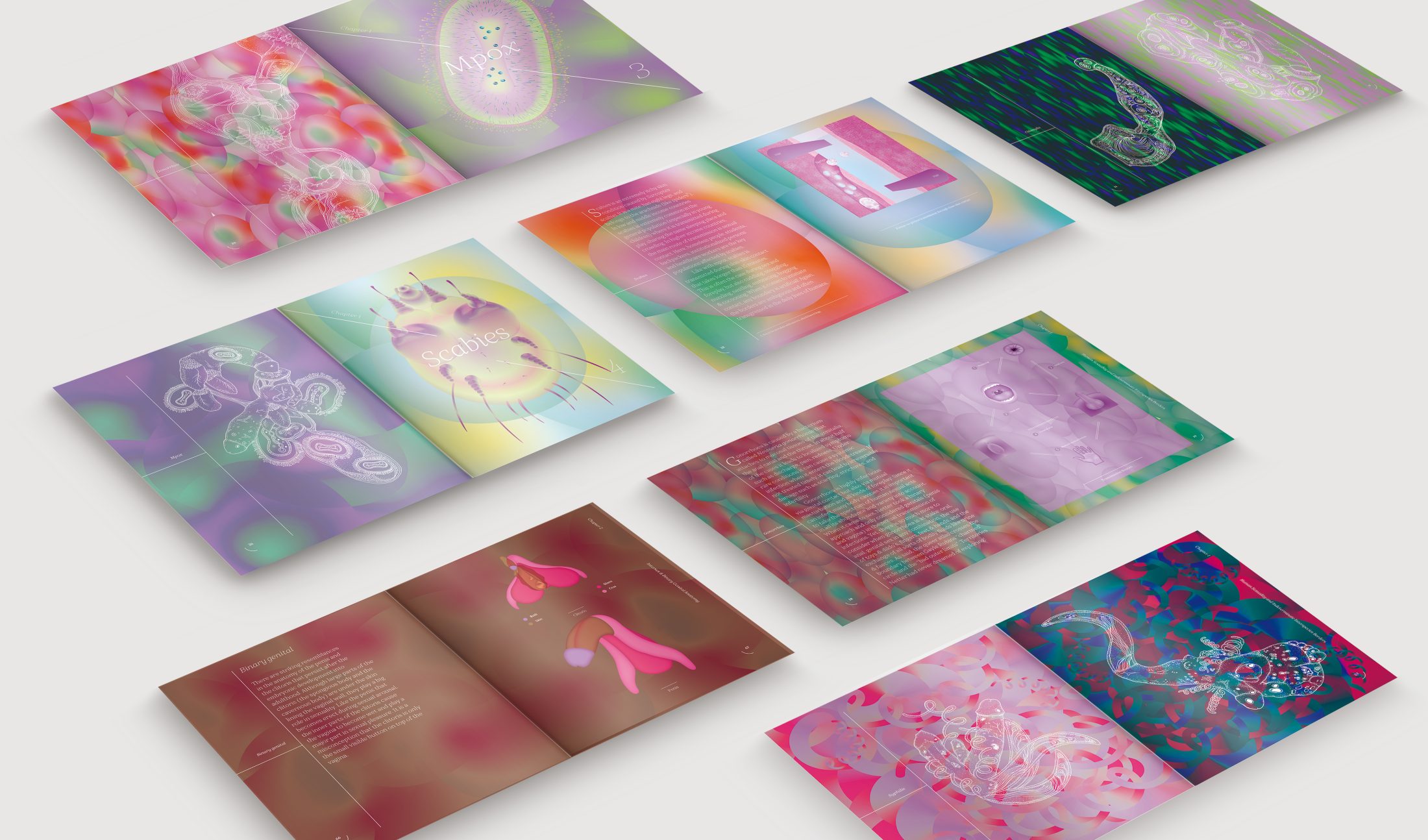
The themes of the first five chapters came from brainstorming between Henry and me. For example, the first chapter is about interspecies anatomy between STIs, pathogens, and the human body, which was inspired by Henry's research and expertise. Then we came up with the intersex chapter, the chapter about body odours, about masturbation, about gender affirming surgery, etc. It all came from our own perspective, so it’s a bit limited to our own understanding and life experiences. So, after we published the first five chapters, Henry and I discovered that we do have limitations.
We used the workshops to engage the public to create collages and include them in a digital archive, creating a more democratic and collective version of anatomy. Also, we are thinking about making an open call in the future to invite more artists and designers to contribute to chapters.
I noticed that the project is not only a collaboration with Henry, but also involves participatory workshops. I was wondering what you yourself learned from the participants.
We learned a lot. We also got critiques because we have multiple audiences in the different workshops we make. Sometimes they are creative people; sometimes, medical people. For the medical audience, we mostly get very positive feedback for diversity and inclusion.
But sometimes we get the critique. For example, we were in the STI conference, and one of the participants, who is a transgender person, had a critique about the chapter on gender-affirming surgery: the majority of people in transgender community didn't receive surgery; they are mostly taking hormone treatment, but our chapter is very surgery-centric. Of course, Henry and I were explaining that this chapter is more about functionality, for providing images for surgeons to learn this surgery. From our research, we discovered that medical schools don't have much visual material for teaching this kind of surgery. We thought that, personally, we need to provide more visual material. But we also understand that for transgender community, the surgery is a very dominant theme of how the general public sees them.
Some of these critiques inspire Henry and me, so we thought that through the open call or workshops, we could receive more feedback from the audience and not be limited by ourselves.
What’s next for the Atlas of Queer Anatomy?
We have more ideas. For example, we're working with the gender-affirming surgeon at the University of Amsterdam hospital, Naomi. She came up with an idea of a chapter about customised surgery for non-binary people. Usually, in gender-affirming surgery, you have to identify yourself as a male/female, so you can shift your gender from one to another. But if you identify yourself as non-binary, this kind of shifting doesn't exist. As an example, sometimes, when a person receives surgery to reduce the breast, they don’t want to keep the nipple, because they’re identifying themselves as non-binary. This is very unique for the medical world, which continues to use the definition of a ‘normal body.’ Also, Naomi used the workshop for her own students, so Henry and I are very happy to see that a real medical doctor is adopting our method in real medical education settings. This is what I talked about in the very beginning: we have the mission to extend the Atlas to the medical settings, and it just happened naturally.
We also continue to host workshops and book launches at different places. This summer, we plan to join a human rights conference in Amsterdam. We are trying to engage more people in different ways to engage people from various backgrounds.
I have a feeling I'll probably keep doing the project, because it shows so many possibilities. Henry loves it as well; we have already worked together for almost five years. We have a very close cooperation between art and science, and we are very happy to continue working together in the future.
Very happy to hear and looking forward to new editions. I was browsing the Limestone bookstore in Maastricht when I saw the Atlas. I found it inspiring how art can open up space to critique areas that are often left unquestioned in the medical sciences.
Learn more about the Atlas of Queer Anatomy here.
Explore works of Kuang-Yi Ku here.