

Annie Zeng
Veronica Yakimovich
2 March, 2026
Interview
Mathew Arthur
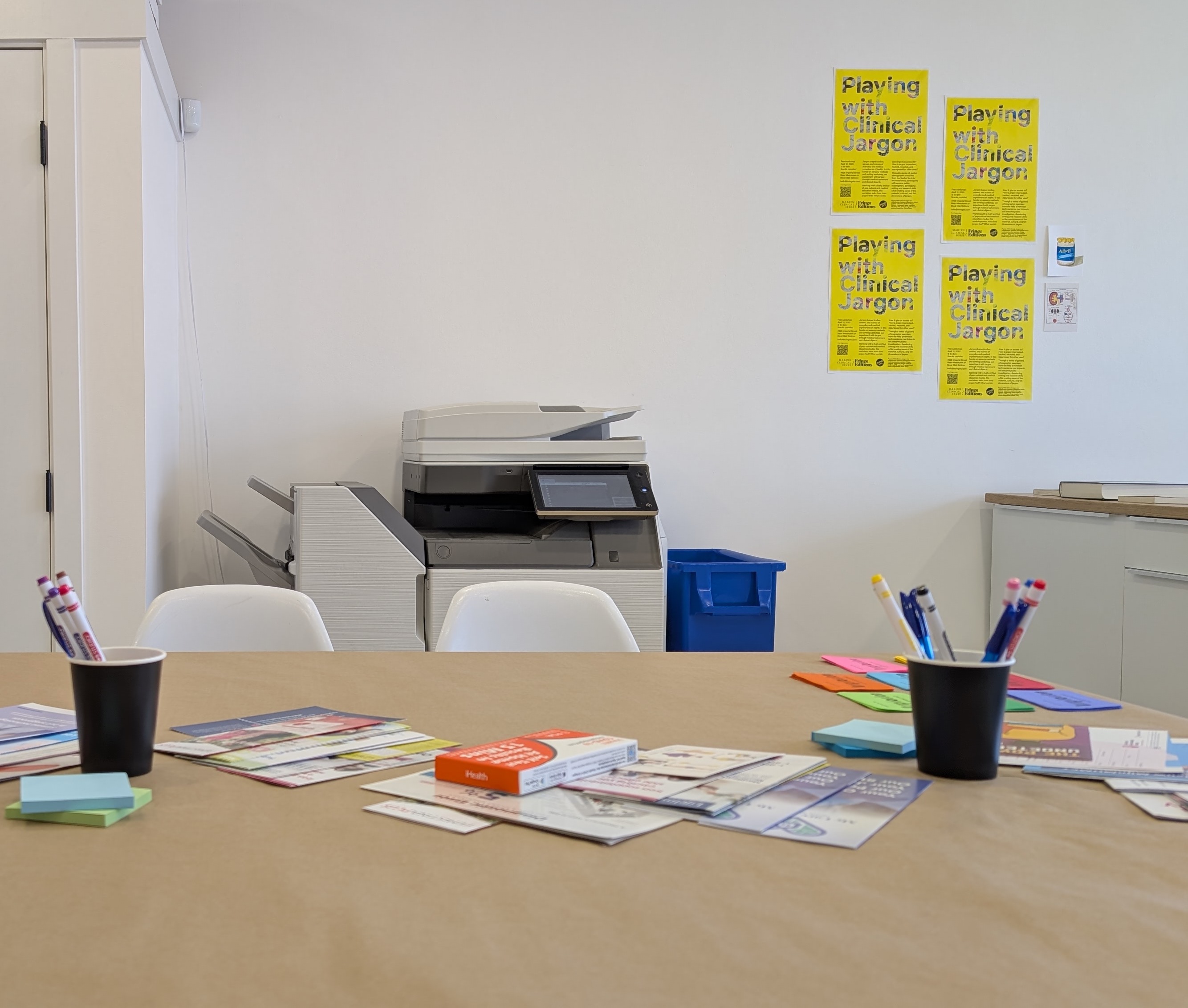
When medical language feels distant and disorienting, how can we play with it, question it, and give it new meanings? In this interview, Annie Zeng, cultural researcher and producer, reflects on the participatory workshop Playing with Clinical Jargon, co-curated with Fringe Editions and Doing STS.
Why was jargon an important thing for you to research?
Personally, I have an interest in language and linguistics. I think we don't often think of jargon as an object for learning or study. But even through this workshop, talking through it with people, it is something that impacts how we experience the medical environment, the medical world. So it definitely came from personal interest, and also from an interest in taking a closer look at something that's not normally an object of study medically.
I noticed in the zine you made that you talk about both the material and sensory aspects of jargon, which is a very STS-based approach. I was thinking: which STS theories or approaches, or from other domains, did you use to guide your workshop design, if any?
A couple of things: definitely the materiality came from a very STS-based approach, but also because there were three of us living in three different locations, also with very different languages as well: Dutch, where Anna (ed. Anna Harris) was; Mathew (ed. Mathew Arthur), our collaborator, in Vancouver; and I was in Los Angeles. It was one way to ground us in the medical communities locally and bring that material into research. We went to local community clinics to collect ephemera. In that way, it was a very nice way to ground all of us in these different sites ethnographically and bring that to the workshop. Mathew also brought in the exercise of ‘writing hundreds,’ inspired by Kathleen Stewart and Lauren Berlant. Additionally, we worked through an adapted framework of implosion originally developed by Donna Haraway and Joseph Dumit. Lastly, another aspect we brought was creative writing, reading and exquisite corpse. In the beginning, we did a warm-up just to get people comfortable in the space. We picked up the objects we had, and people started reading from them, picking out words that stood out to them. Then we read them aloud in an exquisite corpse fashion to form a poem and made a recording of it. It was really interesting, because it was a great way to get people to sound, hear their voices, and come together as an intro, but also it was a way to get us started thinking about which words were hard to pronounce or were unfamiliar. Where were we tripping over? That really introduced us to the idea of how foreign of a language medical jargon can be sometimes, even if you're speaking the language you think you're speaking.

But at the same time, are there always problems with jargon, or can it also help us sometimes? Because I feel like jargon is a double-edged sword. You were mostly focusing on the problematic side, or did you also consider the helping side?
Yeah, definitely. That was a lot of what came up in people's experiences. I think sometimes people were talking about how, at first, you were living in this confused body where you're trying to figure out: ‘something feels wrong with me, but I don't know what feels wrong with me,’ and that not-knowing, that discomfort, the lack of description, can be very uncomfortable. And once they actually found the medical jargon, the words for it, it was very liberating, because they could point to it. They could describe it to others. They could share in communities with others who were also trying to learn how to live with these types of things. It can be very powerful to name.
Like epistemic justice in a way, to name your condition.
You mentioned previously that you engaged with medical objects and ephemera. Could you please provide some examples with specific objects or ideas that you used for the workshop?
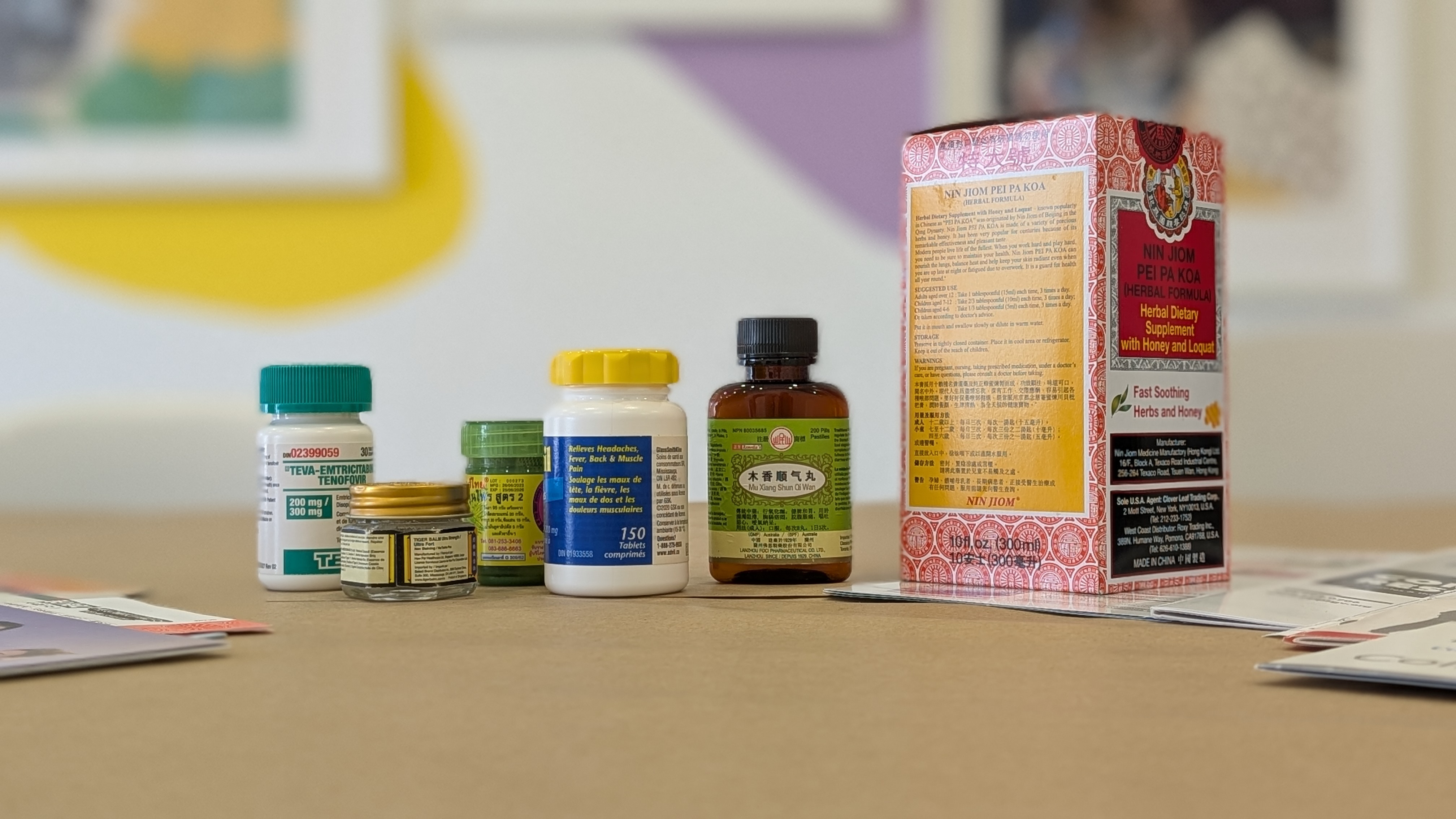
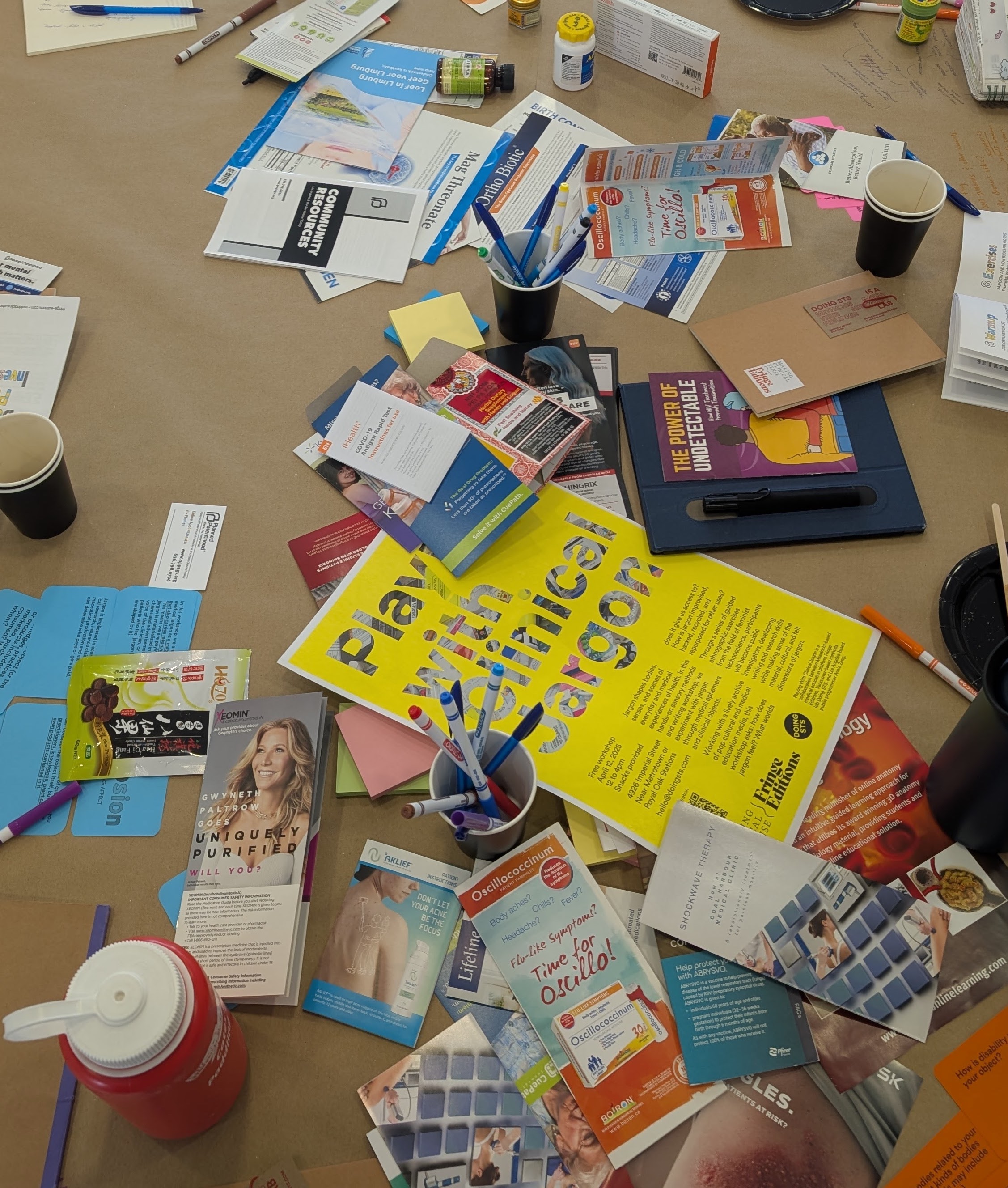
We went to local community clinics and picked up things like brochures and medicine bottles. We had leftover, unused COVID tests and packaging bottles, and also intake forms for IVF or other types of operations. So, just normal things that you would question when you come into contact with a hospital system, or with even just medicine and pharmacies outside of it.
Since the workshop wasn't specifically targeted at medical professionals, how did you ensure that a workshop on a very specific medical topic would be accessible to a broad audience?
We were talking about the medical field and medicine because hospitals and medicine are experiences we all inevitably have. So, it means we have entry points into what to talk about. That's not always the case with other high technologies.
Among other things, we approached it through a way of storytelling; we brought in creative nonfiction texts to read alongside more theoretical ethnographic texts. I think having those things to read, where people are writing about very personal experiences with their own bodies, and then relating that to experiences with your own body, it creates different entry points and accessibilities.
Do you have anything you learned from the participants? I feel that in the participatory types of workshops, not only do the participant learning something, but also you as an organizer learn something from people, maybe you remember some stories to share?
These workshops really feed back to the organizers as well and inspire new forms of research. As I mentioned before, some of the things that really stuck with me were how, once people know how to name something, they enter another social world, and get inducted into them. It became clear to us that the medical field requires a lot of self-advocacy. Sometimes you are actually the expert on whatever disease you have, because there are a lot of diseases that are overlooked.
Another thing that came up and stuck with me was the children of adults who are moving through different countries or migrating with them and then being introduced to new medical systems. There were stories about a parent being in a new country where they didn't speak the language, and often a child had to accompany them to be a translator. That child had to become an expert in this new medical world that is even outside their own body but related to their parents. Definitely a lot of learning about how little worlds are created, what it means to be a non-professionalized amateur who is also an expert in your own diseases, what research can mean, what it needs to mean sometimes for someone dealing with a disease.
That's very interesting: the notion of expertise is being challenged when you're designing participatory workshops.
Do you have any specific takeaways for people who want to use those types of methodologies in their own practice?
One of the things I've learned along the way and am still trying to practice is what it means to listen and develop truly reciprocal relationships with the communities you study. Because it's a strange relationship: we are researchers with research minds, interested in doing research, interested in people, in getting to know cultures. But what does it mean to have that mindset, while also doing very engaged community work? When does it come at an extractive cost? When is it actually reciprocal? When is it beneficial? Negotiating that tension in a relationship requires a lot of listening and understanding of the community. Sometimes, depending on projects or funding, there's no opportunity for long-term engagement, and I think that can be one of the most harmful aspects of this type of work. And so, how do you think about long-term engagement? How do you think about the continuing life of something?
To learn more about the workshop’s methods, see these recommended readings:
Playing with Clinical Jargon Zine
‘Ordinary affects’ by Kathleen Stewart
‘Writing the Implosion: Teaching the World One Thing at a Time’ by Joseph Dumit
‘Illness as metaphor’ by Susan Sontag
Michael Taussig’s works