Sensing Spaces of Healthcare
Veronica Yakimovich
11 April, 2026
Educational Activity
There is a wealth of evidence showing the importance of the senses in healthcare environments, but there is little guidance available for people who want to improve sensory environments.
At the same time, you don’t need to be a trained design professional to achieve good sensory design. There is much that can be improved within your timeframe, budget or other limitations to make positive change for future users of a healthcare setting.
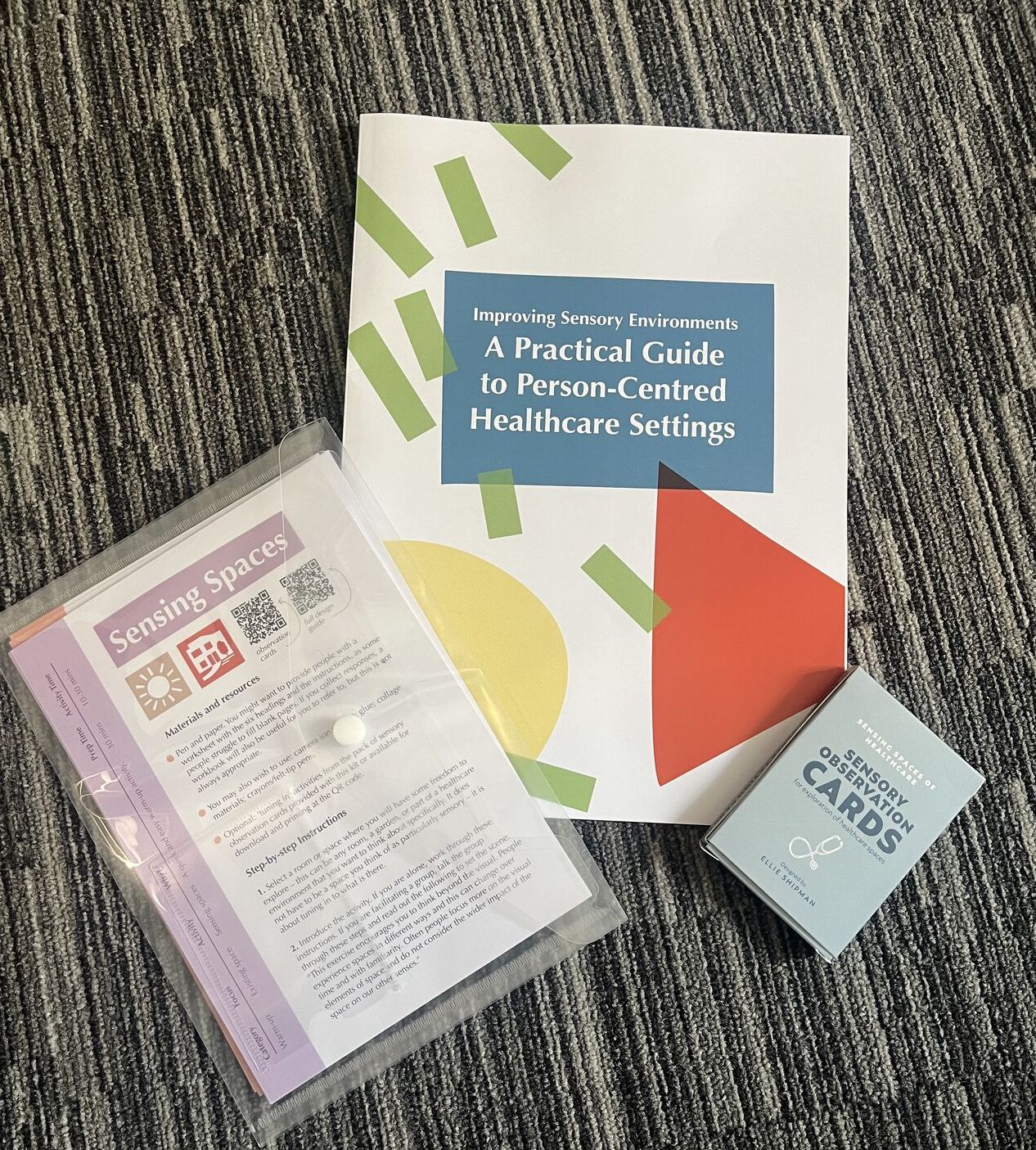
Practical Guide to Person-Centred Healthcare Settings provides tools that support healthcare teams to improve sensory environments. The activities in the guide aim to support meaningful and rich consultation by encouraging people to think about healthcare spaces beyond just how places look, but also pay attention to all body senses.
The Guide was developed by a multidisciplinary team of academics and practitioners in healthcare, arts, and architecture, all of whom have used and tested these methods as part of research projects and professional practice.
You may wish to use it if you are planning a new project as an architect, a hospital arts coordinator, or a designer. This guide may also be useful if you want to improve an existing environment, or to gather evidence to advocate for change. You may be working in a hospital in any role to do so, for example as part of estates or planning team, or as a member of healthcare staff.
You can find a Practical Guide to Person-Centred Healthcare Settings (in English and Dutch) in our Downloads section.
Discover more projects from the Sensing Spaces of Healthcare here.