

Eglė Kižaitė
Veronica Yakimovich
25 September, 2026
Event Coverage
Veronica Yakimovich
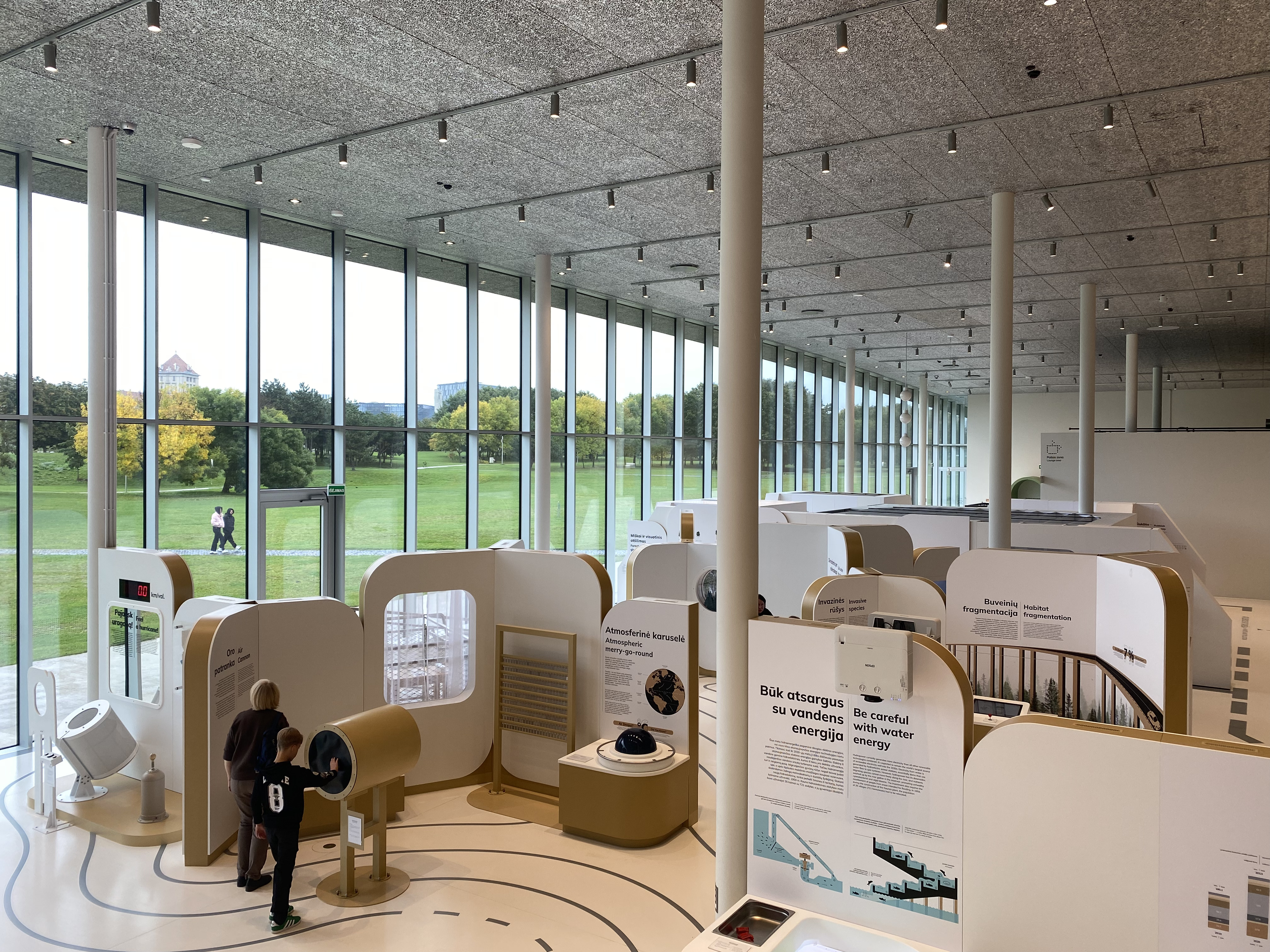
On a rainy morning in Kaunas, I headed to the Mokslo Sala, Lithuania’s first Science Centre, opened just two years ago. I was met with the spacious, bright area filled with various interactive installations. The centre's mission is to invite visitors of all ages to explore, make mistakes, and rediscover a love for science through entertainment, challenging the myth that enjoyment and value are mutually exclusive. And indeed, the running-around kids pressed buttons, turned levers, and engaged with science experiments from quantum physics to robotic-assisted surgical systems without fear of breaking the installation or being wrong.
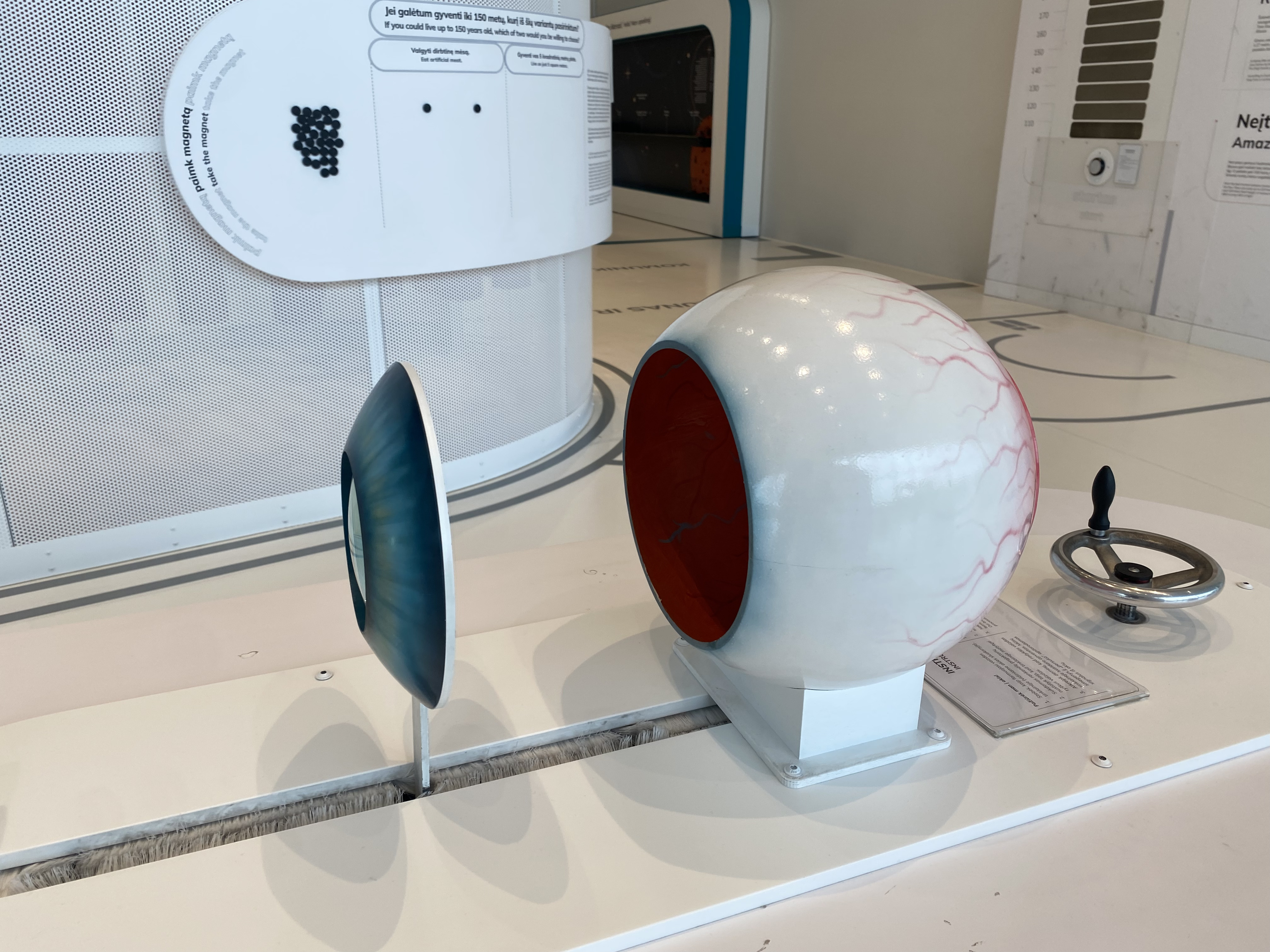
The part that hooked me the most was the section about the different parts of the human body and how they function. There, I explored how the eyes work, checked what sound frequencies my ears could detect, tested my taste and smell senses, saw how the heart pumps blood, and read about the bacteria and fungi that create a complex microbiome inside us. The experiments and visuals helped me understand these topics in a more interesting and practical way.
I also learned about the history of medical technology and how different inventions changed the way doctors examine patients. One example was the stethoscope, which began as a simple tube that was invented to allow doctors to listen to a patient’s heart from a distance instead of having to place their ear directly against the patient’s chest.
But my main goal was to visit a workshop that takes medical education a step further. Food Path: How Does a Bite Turn into Energy? is an educational activity designed for elementary-school children to learn the digestive system. Through hands-on activities, children explore how food moves through the digestive tract, where it is broken down and mixed, and how the body absorbs nutrients.
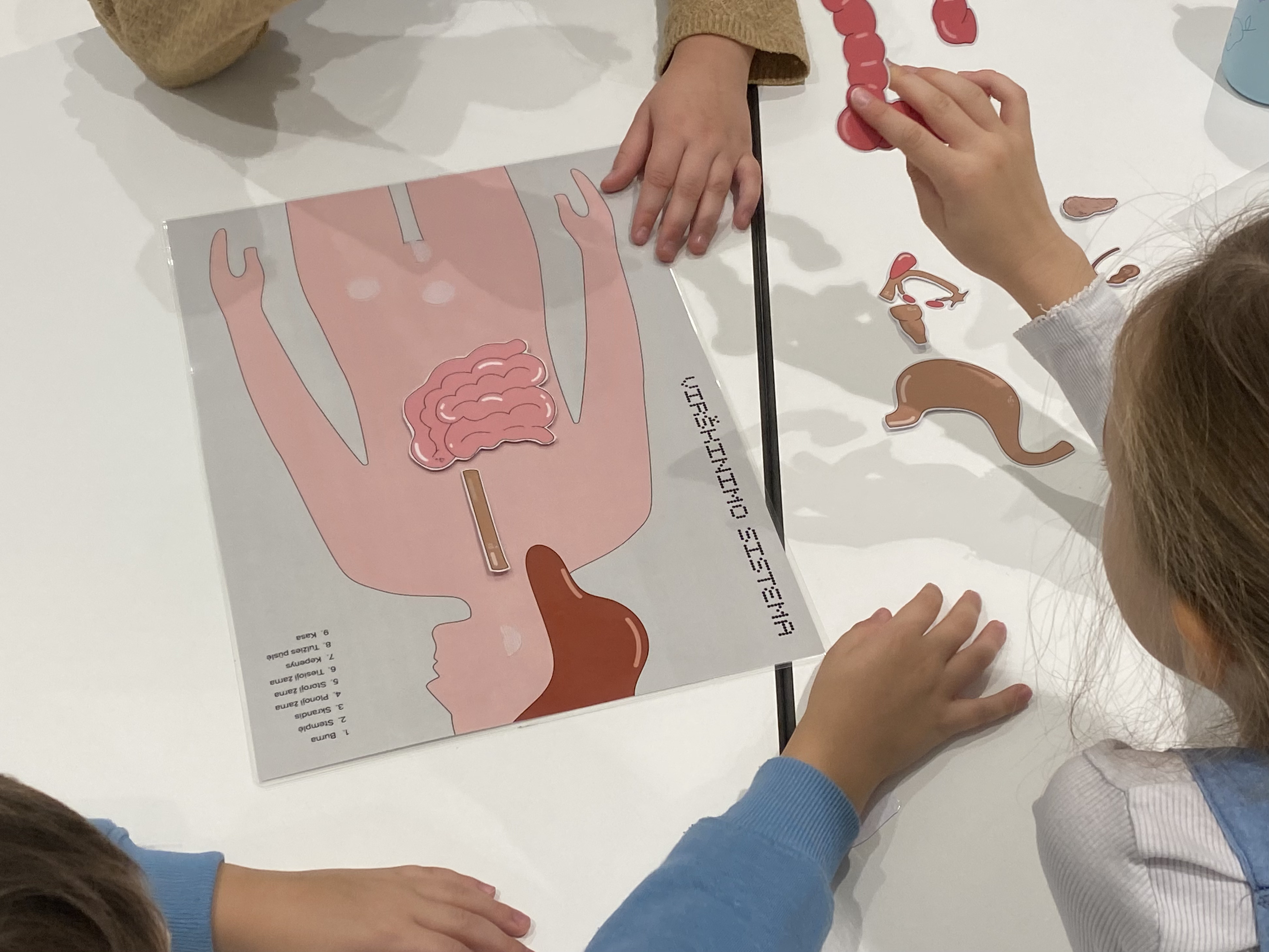
In a simple, engaging way, children first learn the names of the organs that make up the digestive system by sticking them onto a plastic model of the human body. They also learn each organ's function and discover just how long the small intestine is by stretching out a long plastic tube that represents it.
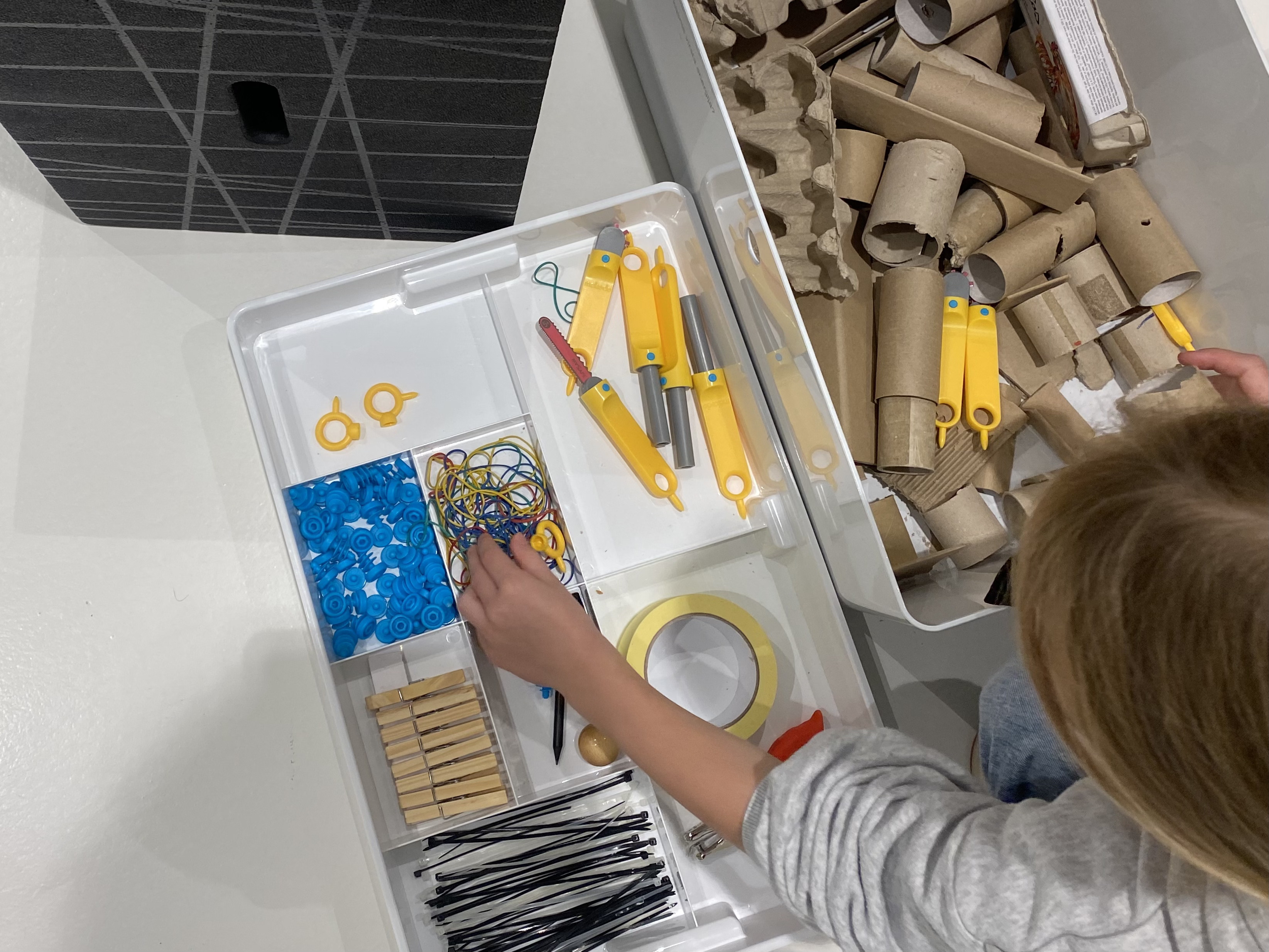
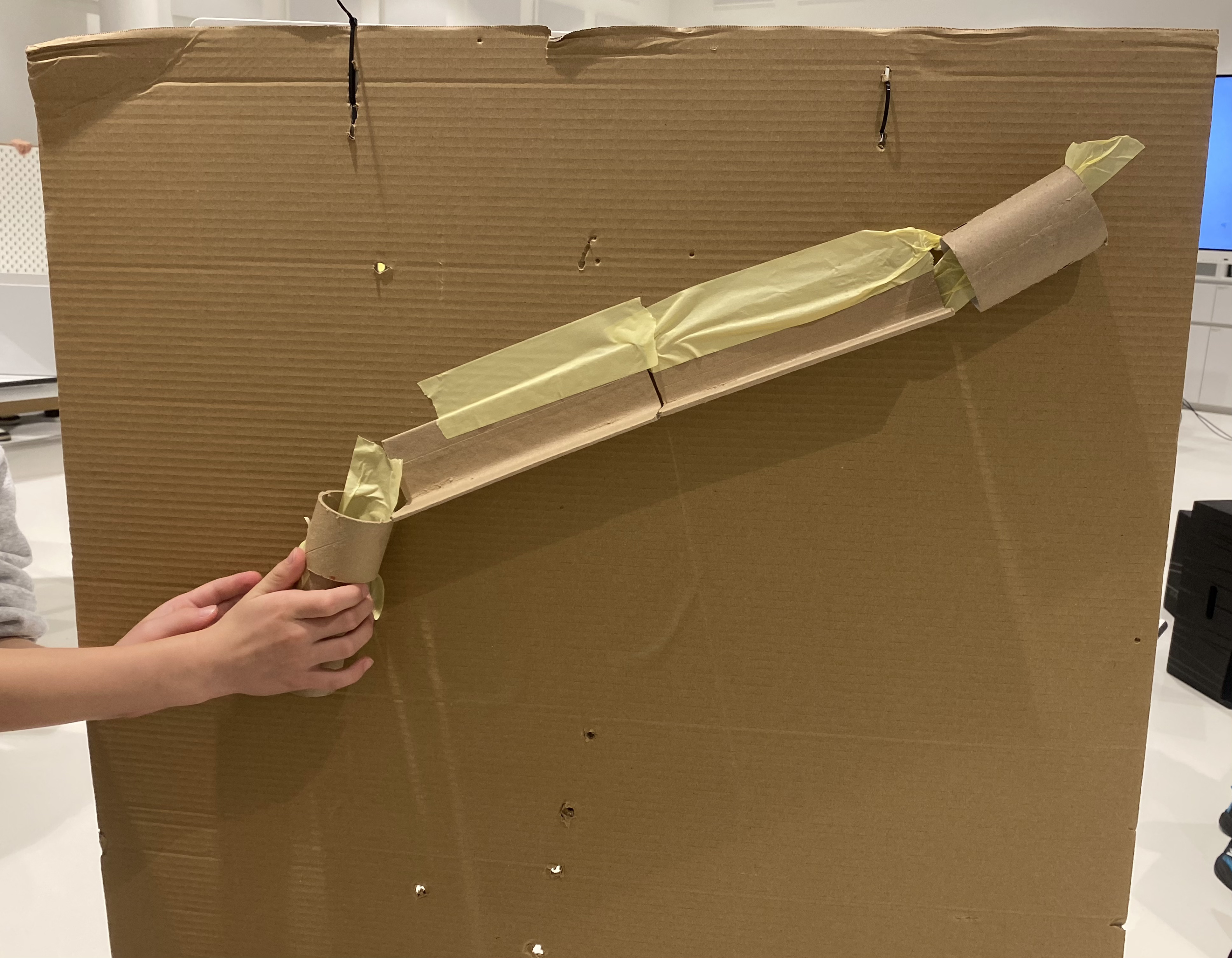
And then, the most fun activity begins. Working in teams, young people create a marble run from repurposed secondary materials like egg packages and toilet paper rolls to recreate the digestive system's working pattern. Building this simple structure collaboratively from scratch helps them understand the body's complex processes in a comprehensible way.
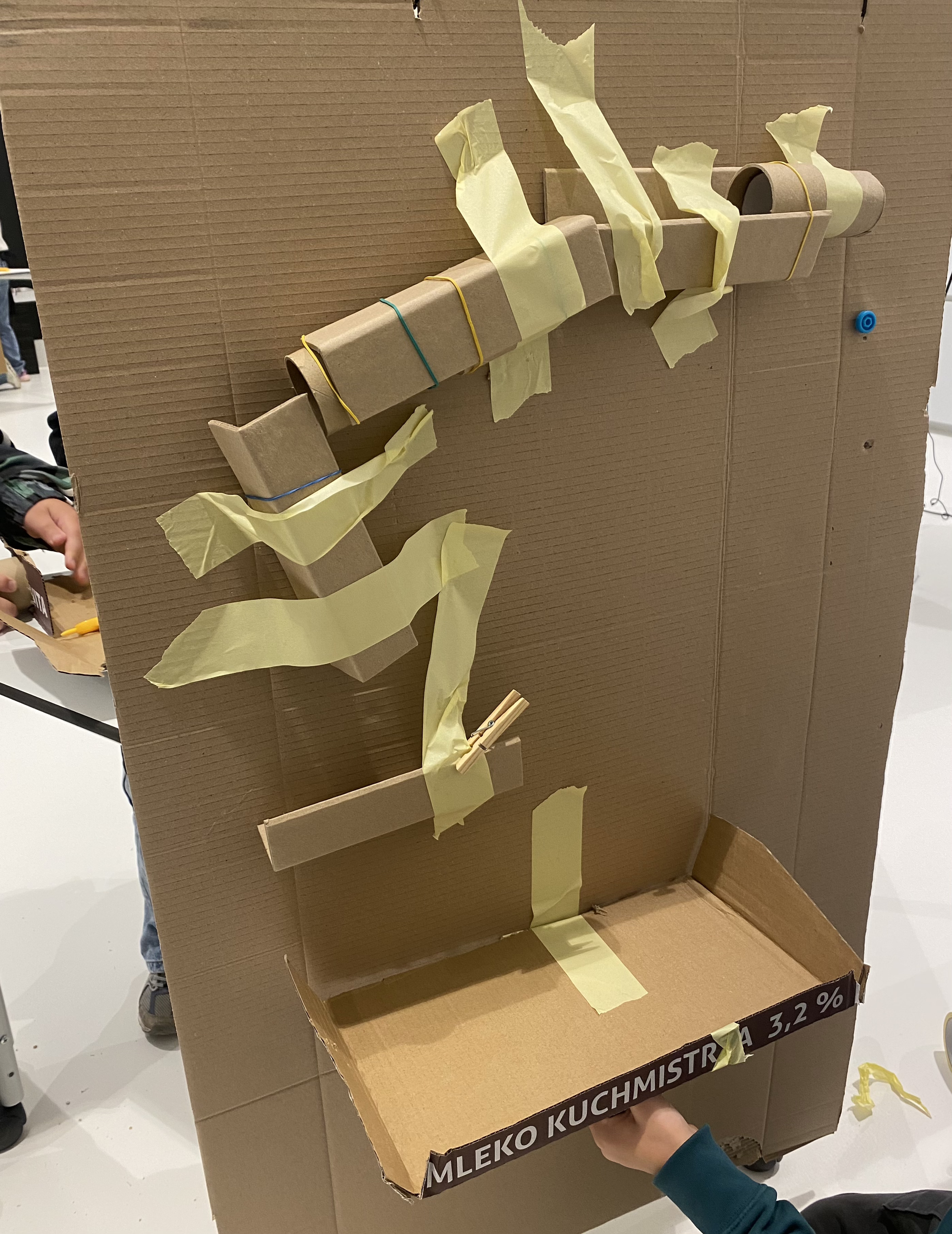
Later, I sat with the workshop designer, Eglė Kižaitė, who told me about the inner workings of creating the workshop.
Why did you choose the digestive system as a topic for elementary school children?
One of the reasons is that digestion is something that’s happening for everyone every day - we don't live without the digestive system. I feel that adults often don't understand how their bodies work, so I think it's important to learn from a young age.
Also, the digestive system is sometimes a taboo topic because it ends with going to the toilet. So I want to normalise this and teach children to not feel ashamed of various stomach feelings, because it's normal to feel them and to talk about them.
And, of course, I wanted to connect the workshop to the part of the exhibition about the human body and health.
And what makes this workshop different from formal science education at school?
Children learn the topic in their school curricula, so they already have a lot of knowledge. But formal education focuses on learning a lot of information, writing papers, and taking tests afterwards. Here, the purpose isn't just to get information, but to work hands-on in a team. It's important for school students to have a playful workshop that sparks curiosity about how their bodies work. I think their brains work better when they do things. So I decided to connect the theory with building the marble machine. They don’t need to build the real digestive system; the point is not to tell them what to do, but to inspire them to think.
I also didn’t want it to be a digital project, where you tap answers on the screen. In this digital era, it’s very easy for children to do all these digital things, but hands-on projects can be challenging.
How does working in teams change how children deal with the workshop topic?
Working in teams is challenging, so we aim to create a positive environment where they feel comfortable working together. After all, the digestive system is also working like a team - when something is not working, everything stops. This is the bigger idea behind this workshop: we have to work as a team if we want to build something like a digestive system.
In cases of conflict, teachers sometimes start sharing their ideas and intervening. But we appreciate it when teachers are understanding and do not tell kids what to do. Just be aware and stay with the kids. We are not telling kids they made a mistake, but we offer to try another way. Moreover, sometimes kids are just tired, hungry, need to calm down, or need to go to the toilet.
I noticed the kids stayed very engaged throughout the whole process. I can imagine it is quite rare to keep them interested for the whole hour.
Actually, we don’t have a big problem keeping them engaged. There is a slight layer of competitiveness to the project, not too much, but it can be a nice feeling.
I guess it’s part of the play to have a bit of a competitive feeling. If it doesn't go too far, it contributes nicely, I think. And since you've run this workshop multiple times, was there anything that surprised you about how children engage with the workshop, or the questions they ask?
At first, I was a bit surprised that some classes questioned everything: ‘What should I do?’ They become afraid of doing things without clear instructions. It was interesting to me that, even in primary school, these young children are so afraid of mistakes. So my goal is to help them feel brave enough to make mistakes, because you learn by making them. You don't learn every time you are just making things right.
It is also interesting because we ran workshops both with children accompanied by their parents and with kids on their own. We noticed that children work much better than parents. Parents overthink, but kids go with the flow, so they understand the tasks much better. With parents, they often don’t start engaging because their parents stop them. So maybe that’s partially the answer to my question of why they're afraid of mistakes. Because of that.
As I was leaving the exhibition, I stayed a little longer to read and interact with the installations. By then, more children of different ages had arrived, making the space feel even more lively. Seeing their curiosity reminded me how important it is to make education accessible and welcoming from young age.